Case Study · Breathwork//Tactics
A sheriff asked for help.
We applied The Language of Breath.
Breathwork//Tactics is what happened when the Language of Breath system was pointed at law enforcement. It is the clearest proof we have that this system is not tied to one goal.
What actually happened
Someone described a problem, and the system already contained the answer.
A sheriff came to us with a population under a specific kind of load: officers making high-consequence decisions with a nervous system that does not distinguish between a traffic stop and a threat to life. He was not asking for a breathing technique. He was asking whether any of this could help his people.
We did not go looking for a new modality. We ran the same process our students are taught to run. Assess the population and what is actually happening in their physiology. Identify where the existing protocols stop being useful. Select from the full range rather than from one lineage. Sequence it for the job, not for the room it is taught in. Then test it and log what changes.
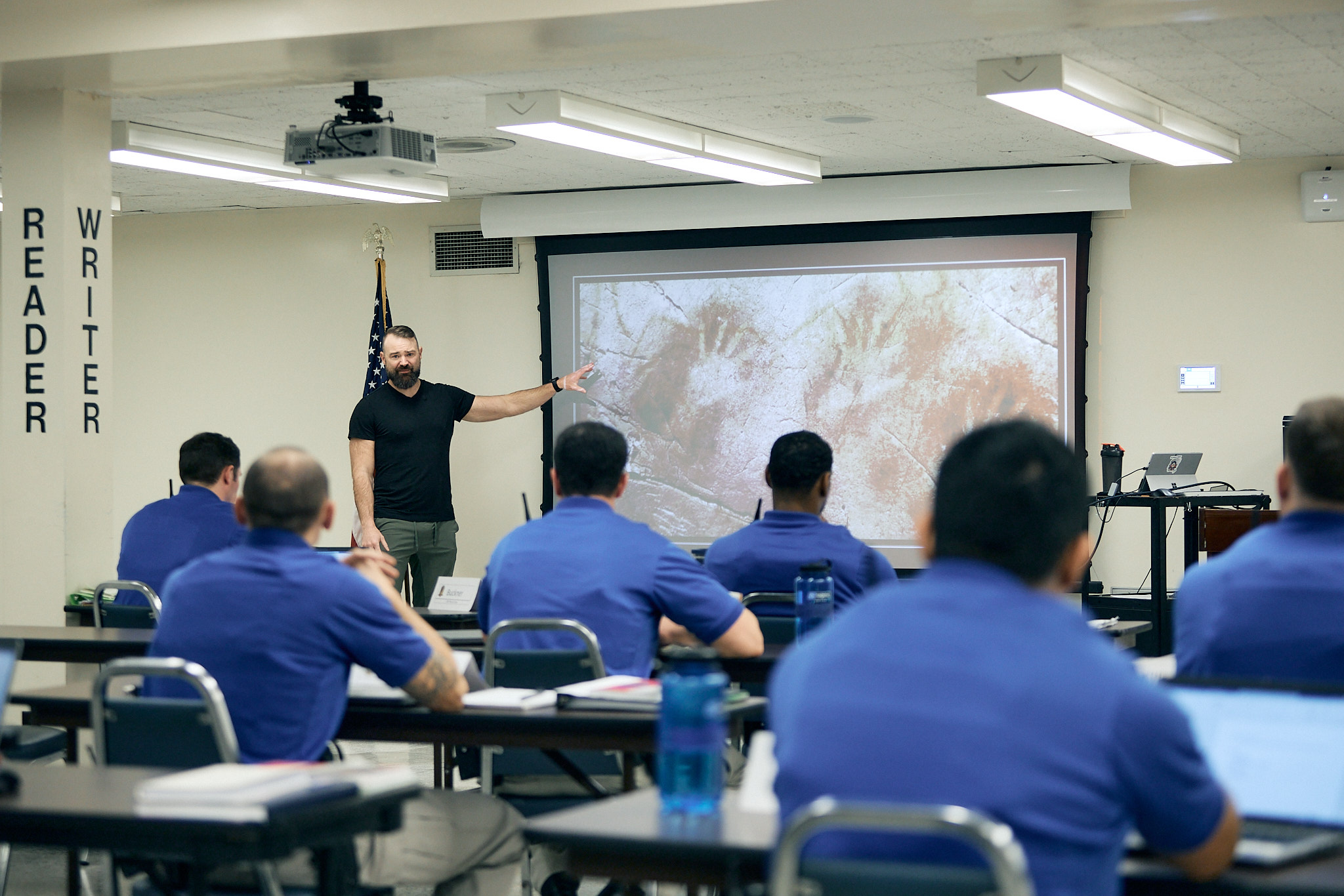
What came out the other side was Breathwork//Tactics, now a program of its own with a published white paper and academy cohorts behind it. But it is not a different method. It is the Language of Breath system applied to one population, by someone who understood both.
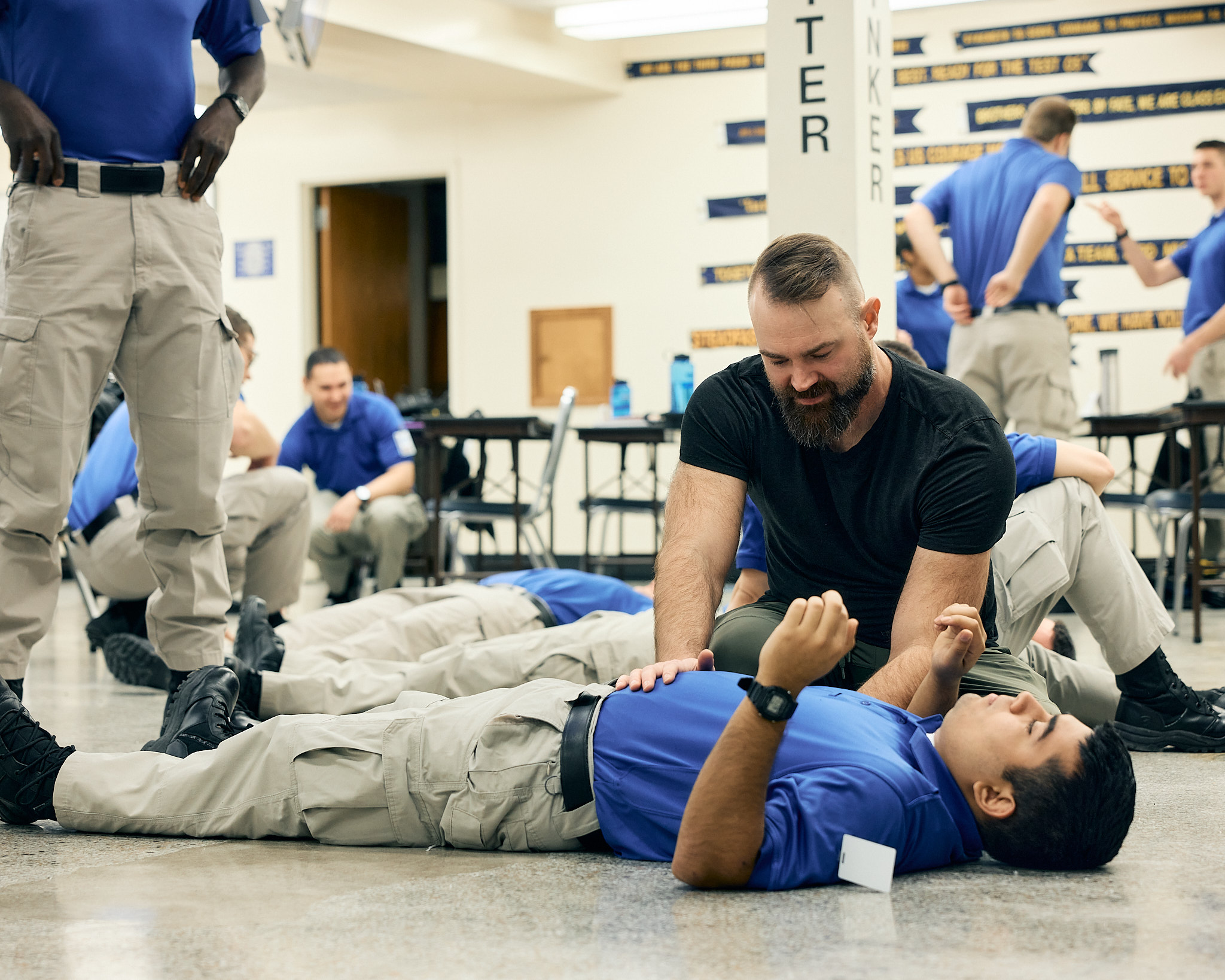
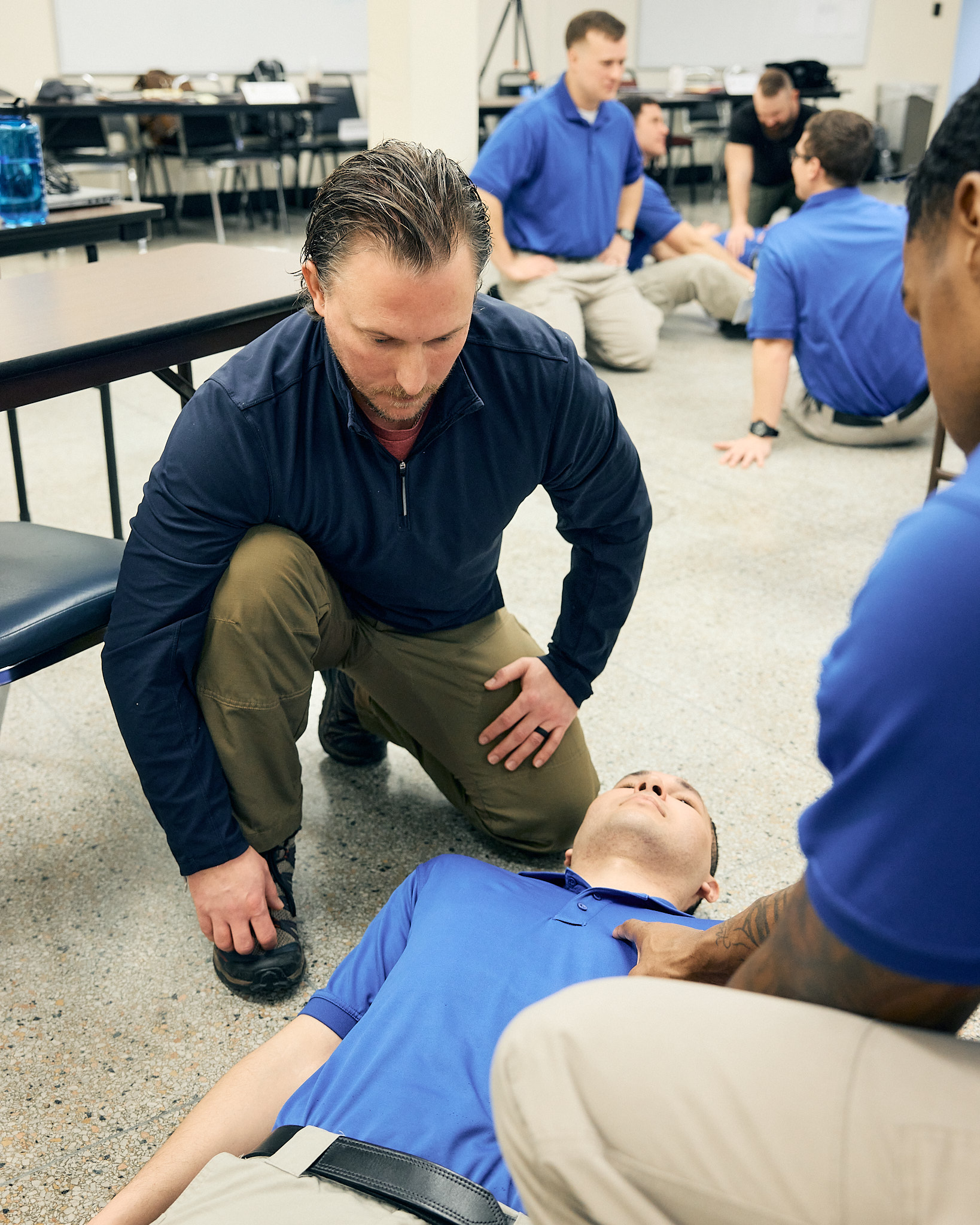
Indianapolis Metropolitan Police Academy
Why this matters to you
This is the thing we are actually teaching you to do.
Most certifications hand you a protocol and a certificate. You leave able to run their session on whoever walks in, and when someone arrives who does not fit it, you have nowhere to go.
We teach a system for reading the person and the population in front of you, so you can build the thing that serves them. Our graduates have taken it into clinical practice, athletic performance, recovery work, education and first response. Not because we wrote a module for each of those, but because the underlying method holds when the population changes.
Breathwork//Tactics is simply the version where the founder did it in public, wrote it up, and published the citations so anyone can check the work.
What made it transfer
The population sets the protocol
Officers were measured before anything was prescribed. A program built on what this group's physiology was actually doing, rather than on what worked for a retreat audience.
Every technique available
Because our graduates are not locked into one modality, the selection could be made on fitness for purpose. Some of what works in a wellness room is actively wrong for a patrol shift.
Published, with the limits stated
The rationale went into a white paper with 27 references, released CC BY-NC 4.0, so any agency or researcher can read it and argue with it.
For first responders
Certify with us and the Breathwork//Tactics credential is included.
Any first responder who completes either Language of Breath certification track receives the Breathwork//Tactics certification at no additional cost. For someone who wants to bring this to their own agency or peers, that is a serious professional credential attached to a training you were doing anyway.
Only first responders can hold it. Not because the material is secret, but because teaching breath regulation to someone who may make a lethal-force decision on their next shift requires understanding that life from the inside. A facilitator who has never worked a shift can learn the physiology perfectly and still misjudge the room.
- Open to sworn officers, firefighters, EMS and emergency dispatch.
- Included with the online or hybrid track. No separate tier, no upsell.
- Same graded ethics and scope-of-practice standards as the main credential.
Looking for the program itself?
This page is about the Language of Breath system and what it can be built into. Breathwork//Tactics has its own home, with the program, the white paper and agency enquiries.